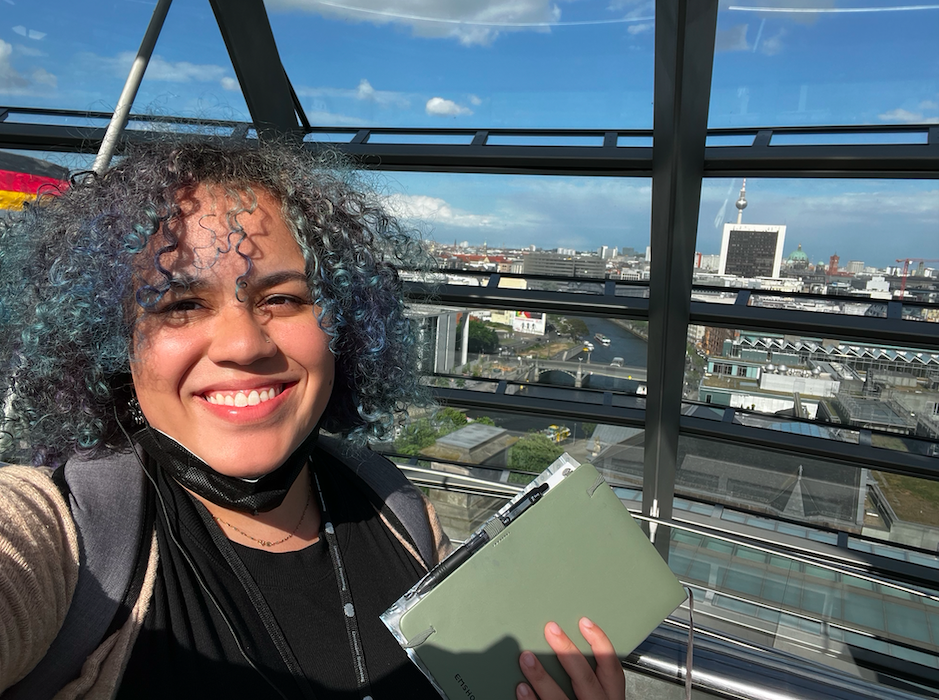
This summer, I visited multiple cities in Germany with my Global Studies 200 class. We visited multiple monuments, museums, companies/foundations, and historic sites throughout the trip. Our professors asked that we present and provide context to many of the places we visited with our class. I chose The Memorial to the Murdered Jews of Europe, also known as, The Holocaust Memorial. Through this post, I would like to offer some viewpoints on the memorial, the effect that the conversation surrounding the memorial may have on our thoughts about other memorials, and also reflections from my tour group and the way they affected my thoughts throughout the trip.
Before discussing the impact of the monument, I would like to provide background information. The German Parliament, in 1999, decided to create a memorial site to commemorate Jewish people murdered throughout Europe. Peter Eisenman, a New York architect, won the competition and designed a monument that comprised of 2,711 concrete slabs of differing heights. As you walk through the monument, not only do the heights of the slabs change but also the height of the ground with the outer rim sitting higher than the middle of the monument. In addition to the monument, which is above ground, there is an informational section below the monument. The memorial opened in 2005.
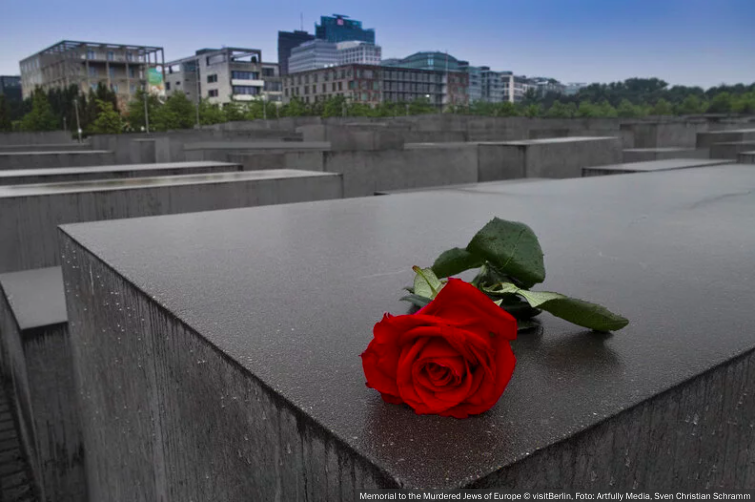
The monument did not escape criticism. One of the main pieces of criticisms that I want to explore is ownership and purpose. Dr. Irit Dekel, in her 2014 piece, “Jews and Others at the Holocaust Memorial, that the memorial was, “not built for or by Jews. It is, however, dedicated to the memory of their murder and prominent Jewish figures in Germany,” (p. 71). This quote begs the question of what the purpose of a memorial is and how that purppose is portrayed. As I walked the memorial, I could not help but to take in the many possible meanings of the ambiguous concrete slabs. I discussed this ambiguity with my classmates and many of us came to the conclusion that maybe they represented multiple graves. This, again, points to the “memory of their murder”.
While there is so much to be taken and learned from this, the piece that I found most valuable was simply the space. The memorial used the entirety of a block and so not only does it take up mental space when thinking about the event, but also a large plot of land. Much of the discussion that I had with my classmates revolved around the content and the way that the memorial presents itself which was valuable to my understanding and thoughts about monuments, but was something that I thought about throughout the week. One thing that I greatly appreciated was visiting memorials commemorating horrible events in history while also enjoying the culture and art that the country has to offer.
The following were questions that I posed to my classmates (in addition to a couple of others) and that I am now posing to you! Please feel free to leave comments in response to the questions or your view on the thoughts shared in this post. In addition to this, please share how you might choose to design a memorial to commemorate an event.
Questions
- Do memorials belong to someone or a group?
- What is the purpose of a memorial?
- How accessible does a memorial to have to be and is it meant to have a certain purpose?
- When you visit a new place, do you find it important/essential to balance the content of your tip? Memorials and Museums vs. Art Exhibits etc.
Works Cited
DEKEL, IRIT. 2014. “Jews and Other Others at the Holocaust Memorial in Berlin.” Anthropological Journal of European Cultures 23(2): 71–84.
“Memorial to the Murdered Jews of Europe.” https://www.visitberlin.de/en/memorial-murdered-jews-europe (August 11, 2022).

Leave a Reply